How to Implement AI in Automation: Step-by-Step Guide
Automation is the use of technology to perform tasks with little or no human involvement. It makes operations more efficient and reduces the need for
Get your daily shot of concentrated business intelligence. Actionable insights, honest reviews, and exclusive deals across operations, sales, HR, finance, data science, and beyond.

Automation is the use of technology to perform tasks with little or no human involvement. It makes operations more efficient and reduces the need for

Artificial Intelligence (AI) is changing the way products are developed. It allows for smarter, more flexible, and personalized experiences. AI integration is becoming essential in

Artificial intelligence (AI) has transformed the world of marketing by enabling smarter, data-driven decisions and automating routine tasks. AI marketing refers to the use of

Artificial Intelligence (AI) in operations refers to the application of advanced algorithms and machine learning techniques to automate, optimize, and enhance various business processes. These

In early 2026, the world of Operations AI news is undergoing significant changes. These changes are driven by remarkable advancements that are transforming how organizations

The world of operations is about to change significantly as we approach 2025-2026. The old ways of making small improvements and using basic automation are

I grouped 63 operations tips into a few high-impact themes: decision hygiene, flow + bottlenecks, systems thinking (ERP/SCM/SOA), and measurement. Then I added a keyword-analytics layer—TF-IDF, Search Frequency Rank, and Research Topic Trends—so the practices stay relevant and measurable.

Build an Operations AI Strategy around five pillars: business alignment, ROI use cases, data/platform readiness, AI governance framework, and operating model skills + MLOps/security. Aim for a 70/20/10 portfolio, deliver 90-day quick wins, embed AI into existing tools, and run weekly/monthly/quarterly improvement cycles to scale.

Operations is shaping the next wave of AI adoption in 2026: fewer pilots, more execution discipline. Manufacturing is already deep in predictive AI (48%), supply chain planning (35%), and process optimization (36%), with 94% using some AI. Cloud ERP is a practical enabler (49% simplify IT, 49% cut costs, 48% improve agility). The winners will pair AI workflows with leadership shift, team preparedness, and clear performance metrics—while planning for big AI infrastructure spending ($527B) and the rise of physical AI (58% today, 80% soon).

Artificial intelligence (AI) implementation in sales refers to the integration of AI technologies into various sales processes to automate tasks, analyze data, and enhance decision-making.

Artificial intelligence (AI) technologies are rapidly changing the world of sales. From finding potential customers to closing deals, AI-powered tools are reshaping how sales teams

The landscape of Sales AI 2026 reflects a remarkable evolution from simple automation tools to sophisticated, intelligent systems that deeply integrate with sales workflows. Early

Sales trends in 2025-2026 show significant changes in the retail and food services industries. It’s important for businesses to understand these shifts in order to

Reply faster than feels polite (63% of buyers expect same-day). Write the plan, protect prospecting time, qualify like a skeptic, sell outcomes not price, and use data + empathy to become a trusted advisor—especially in virtual selling.

If I had to boil it down: I use AI-driven sales tools to cut research time (up to 90%), score leads with predictive analytics, personalize outreach messaging across channels, and coach with conversation intelligence—while keeping humans in charge of relationships. The teams that win in 2026 will treat AI sales integration like infrastructure, not a hack.

Artificial Intelligence (AI) is changing the financial industry by automating tasks and improving decision-making. AI in finance is no longer something that will happen in

Artificial intelligence (AI) is rapidly changing the field of Human Resources (HR), bringing in new tools and solutions that redefine how organizations manage their workforce.

The world of Human Resources (HR) is going through a major change in 2026, thanks to the rapid growth of artificial intelligence. AI technologies are

The world of Human Resources (HR) is going through a major change as we approach 2025-2026. This change is primarily driven by the widespread use

If I had to compress 63 HR tips into one page: build mental health support like infrastructure, hire for skills not pedigree, make pay transparency a strategy (not a memo), use AI integration for boring work not people judgment, and treat workforce planning as your cost-control lever.

If I had to boil it down: I’d start with a skills-based approach and workforce planning, pair HR-IT collaboration with an AI architecture I can defend, pilot agentic AI in HR operations where time savings are measurable, and lock in AI governance (privacy + bias mitigation) before scaling. Then I’d use predictive analytics to prove business value—especially in benefits experience and retention improvement—because that’s where employees feel it fastest.

Artificial Intelligence (AI) is changing the world of finance by automating complex tasks and improving decision-making abilities. The increasing use of AI in finance shows

The world of finance is going through a major change because of the widespread use of AI in finance. Finance leaders are now investing more

Artificial intelligence continues to transform the finance industry at an unprecedented pace. By 2026, AI integration in financial services has become a foundational element driving

The finance sector is going through a major change as we move from 2025 to 2026. Thanks to rapid advancements in technology, especially artificial intelligence

If you want AI that helps finance teams (not just demos), start with 3 workflows: real-time forecasting, AI reconciliation for the financial close, and credit risk modeling. Choose tools that are explainable, integrated (Excel/ERP/Salesforce), and auditable. Measure impact with cycle time, forecast accuracy, and error rate—then scale via no-code automation and AI agents with compliance workflows baked in.

AI in Finance is moving from pilots to operational muscle: agentic AI can cut manual workload 30%–50%, speed PO cycles up to 80%, halve AML case time, and boost credit-risk memo productivity 20%–60%—but only if data infrastructure and AI governance show up early.

Data science is at the forefront of innovation in today’s data-driven world. It involves extracting meaningful insights and knowledge from vast amounts of raw data

Data science in 2026 is at the forefront of technological innovation, driven by rapid advancements in artificial intelligence (AI). The combination of data science and

The world of Data Science and Artificial Intelligence (AI) is changing faster than ever in 2026. New breakthroughs in algorithms, computing power, and access to

The field of Data Science is undergoing rapid transformation in 2025-2026, driven largely by breakthroughs in artificial intelligence (AI). As organizations harness the power of

By 2026, winning with AI is less about “training a model” and more about operationalizing agentic systems on a unified governed data foundation: RAG + vector databases, rigorous evals (golden datasets, offline testing, drift), autonomous analytics copilots, synthetic data workflows, predictive/prescriptive intelligence, and regulation-ready governance (e.g., EU AI Act).

AI and data science ops improved most when we treated generative AI as an organizational resource, built ‘AI factories’ (platform + methods + data + algorithms), invested in AI-ready data, and matured leadership (hello, chief data officer). Agentic AI is real but entering the trough of disillusionment; edge AI and smaller domain optimized models will quietly win on latency, cost, and sovereignty. Open source AI is speeding up governance and capability—if you operationalize it. Plan for denser hybrid computing (even quantum assisted) as AI infrastructure evolves toward 2026.

Artificial intelligence (AI) has transformed the world of marketing by enabling smarter, data-driven decisions and automating routine tasks. AI marketing refers to the use of

Artificial intelligence (AI) is changing the world of marketing faster than ever before. With AI being integrated into marketing strategies, it’s a game-changer for how

Marketing has undergone a significant change with the integration of artificial intelligence, transforming from a traditionally human-driven discipline into a data-powered, AI-augmented ecosystem. By 2026,

The marketing landscape is undergoing a profound transformation as we approach 2025-2026. Rapid advances in AI in marketing and shifting consumer behaviors are reshaping how

For 2026 marketing trends, I’m treating AI as invisible infrastructure: streamline AI marketing operations, use synthetic data sources carefully, measure ROI by cycle time and rework, optimize for AI shopping assistants, and protect trust in AI with real brand authenticity.

AI transformed my marketing operations when I treated it like a teammate with guardrails: invest where ROI is measurable (faster cycles, less rework, scalable content production), track brand discovery across AI summaries/overviews, and prepare for AI agents as the next gatekeepers—without losing human connections.

Automation is the use of technology to perform tasks with little or no human involvement. It makes operations more efficient and reduces the need for

Automation refers to the use of technology to perform tasks with minimal human intervention. Traditionally focused on mechanizing repetitive manual activities, automation has significantly evolved

Automation has become a key driver of innovation and efficiency in various industries. With the rise of Automation AI, traditional processes are being transformed by

Automation has evolved dramatically over recent decades, shifting from simple mechanization to sophisticated AI-driven processes. The years 2025-2026 mark a pivotal phase where automation trends

AI Automation Examples that deliver real results tend to share the same bones: a clear handoff to humans, tight feedback loops, and real-time data. Expect up to ~70% support deflection with AI chatbots, 20–35% lift from sales follow-ups, and 40–50% faster time-to-hire when HR hiring is automated—plus big wins in predictive maintenance and supply chain intelligence.


If you want the easiest on-ramp, Zapier’s 8,000+ integrations still make it the best beginner-friendly automation platform. For visual scenario building and data wrangling, Make’s Core plan ($9/month) is hard to beat. For deep customization and self-hosting, n8n is the most flexible. For AI-first, production-grade automations, Vellum AI shines with evaluations, traces, and versioning. Devs who live in APIs often prefer Pipedream; enterprises typically need governance/RBAC like Workato. If you already pay for ChatGPT Plus ($20/month), the Agent Builder can be a surprisingly good “good enough” start.
In-depth analysis, real ROI data, and transparent affiliate disclosures

Artificial intelligence (AI) is leading the way in technological innovation, changing how industries work and how professionals do their jobs. AI is being used in

The landscape of news consumption in 2026 is being reshaped dramatically by advancements in AI News technology. Artificial intelligence now plays a central role in

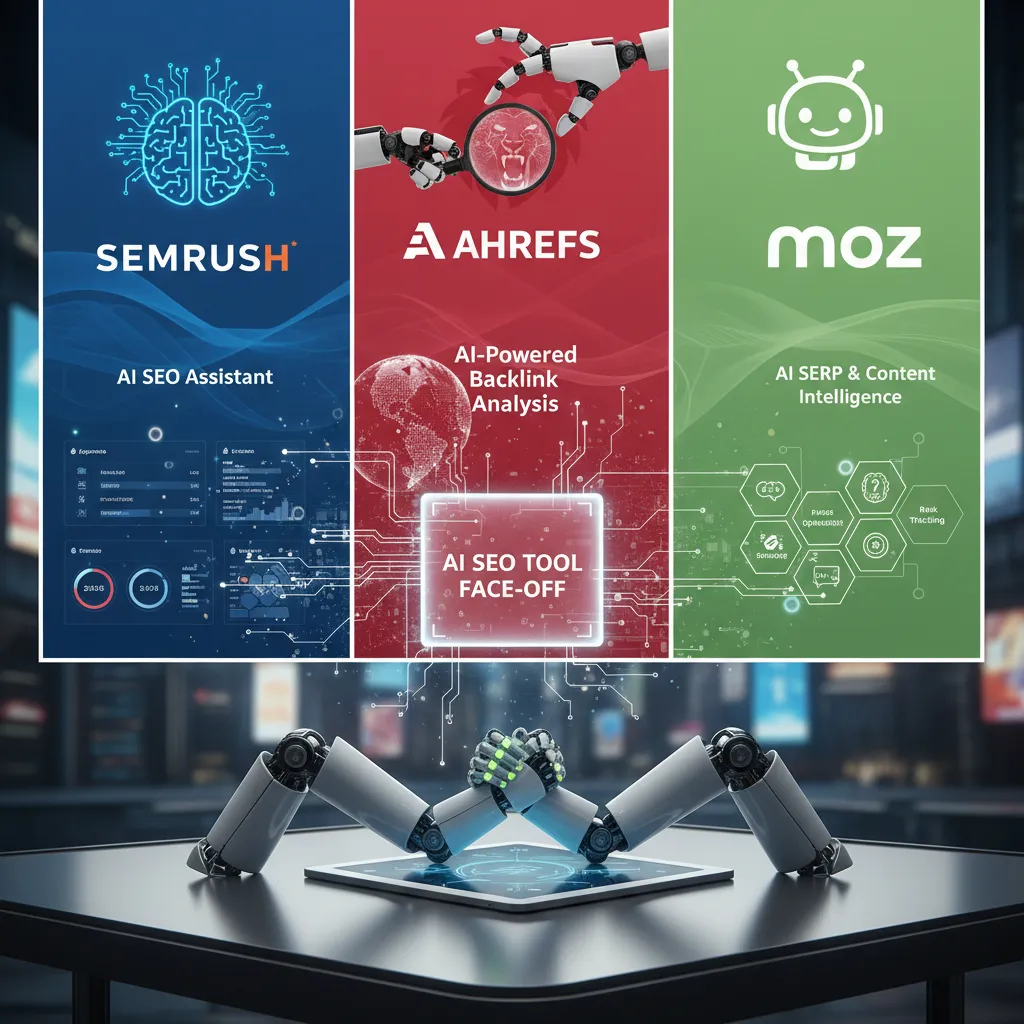
If you live in backlinks and link building, I keep coming back to Ahrefs (huge backlink database, frequent updates). If you need an all-in-one SEO tools + PPC tools + content workflow, Semrush is the “Swiss Army” pick. If you want beginner friendly SEO with Domain Authority and a simpler UI (and lower entry pricing), Moz is a calmer starting point—just expect lighter long-tail keyword coverage.

August’s AI releases signal a shift from chatty tools to agentic AI: AI agents with persistent memory, small language models for cost/speed, and regulation-first deployment (EU AI Act + sandboxes).

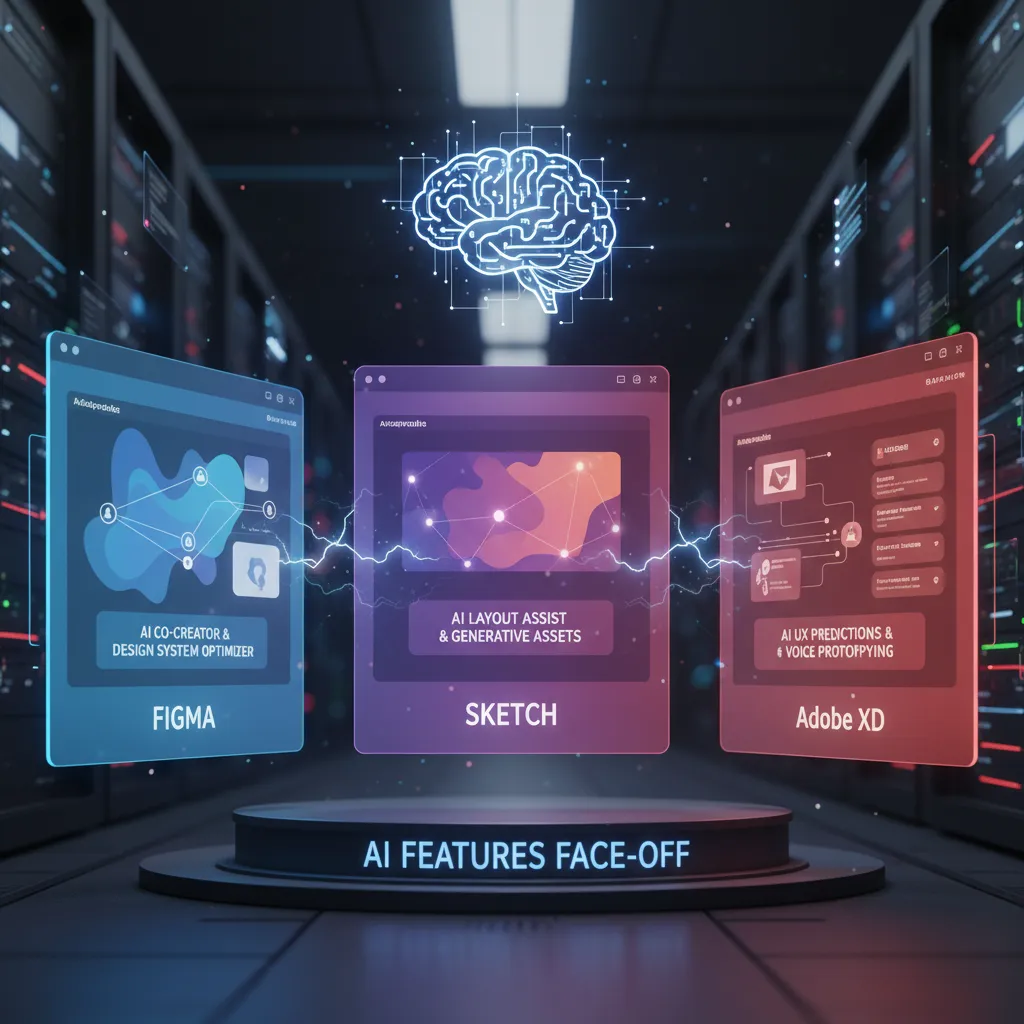
If you live in real time collaboration and cross platform access, Figma is the safest bet (and it’s pushing hardest on AI features). If you’re Mac-only and obsessive about pixel perfect control, Sketch still has real strengths—especially with plugins. Adobe XD has excellent Auto Animate/voice prototyping ideas, but “maintenance mode” changes the long-term calculus, even with Creative Cloud integration.

AI-powered social media management in 2025 works best when AI handles the busywork (content creation drafts, content scheduling, social listening, sentiment analysis, performance analytics) and I keep strategy, voice, and judgment. Pick tools based on team collaboration, multi-platform scheduling, security, and analytics—expect $99–$249/month for premium plans.
Save thousands on business tools with our exclusive partner discounts
AI-Powered Business Intelligence
Weekly conversations with business leaders, AI innovators, and industry experts. Get actionable insights you can implement immediately.